Bonn Bulletin: Finance dominates discussions in every room
While the talks on climate finance itself rumble on without a clear direction in Bonn, finance has emerged as the central topic of debate in all of the other negotiating rooms and main events, officials and observers say.
“There is no progress happening in the finance rooms, and this is sending really worrying signals for COP31,” Rebecca Thissen, global advocacy lead at Climate Action Network International, told a press conference on Monday. “This is toxifying every single discussion in other negotiating tracks,” she added.
Discussions on the Global Goal on Adaptation (GGA) ended the first week in Bonn with a request from the African Group of Negotiators (AGN) to include in the future text the COP30 commitment to triple adaptation finance, a demand that was supported by all the developing-country negotiating groups.
The 2035 goal was agreed in Belem last November but lacked details for its implementation – for example, it doesn’t have a baseline against which to calculate the increase in annual funding. That baseline is one key issue that has risen up the agenda at the talks in Bonn.
Developing countries and civil society representatives already have a clear figure for the goal in mind – $120 billion a year. This is derived from a tripling of the earlier goal of $40 billion a year by 2025. And they want to see a firm target in any decision adopted on the Global Goal on Adaptation.
This would prevent anyone from being able to argue that the 2035 goal is to triple adaptation finance from 2025’s actual – rather than targeted – levels.
Comment: Tripling adaptation finance is just the start – delivery is what matters
Adaptation finance was $31.7 billion in 2024 and is likely to have fallen in 2025, the year Donald Trump took over the White House and European countries cut back development to fund their militaries. So the difference in baseline could equate to at least $30 billion a year in 2035.
But Marlene Achoki, global policy lead at CARE International, said at the briefing that even $120 billion a year “is actually the floor – it’s the starting point to keep things going, it’s not enough for the 300 billion gap,”, referring to the gap between annual adaptation finance and needs of developing countries as estimated by the UN.
A new text presented to governments on Monday didn’t explicitly include the tripling goal but only indirectly mentioned the COP30 decision in one of two options. Consultations were still ongoing on Monday afternoon and expected to continue on Tuesday morning.
On the Just Transition Work Programme (JTWP), finance again was a tense topic among countries. Developing nations want a new mechanism, due to be set up at COP31, to mobilise the money needed for a just transition to a low-carbon world, while many developed countries argue finance shouldn’t be dealt with by the body. Some observers told Climate Home News the idea is not to create a new fund or anything additional, but rather to connect existing initiatives and processes to the projects that need financing.
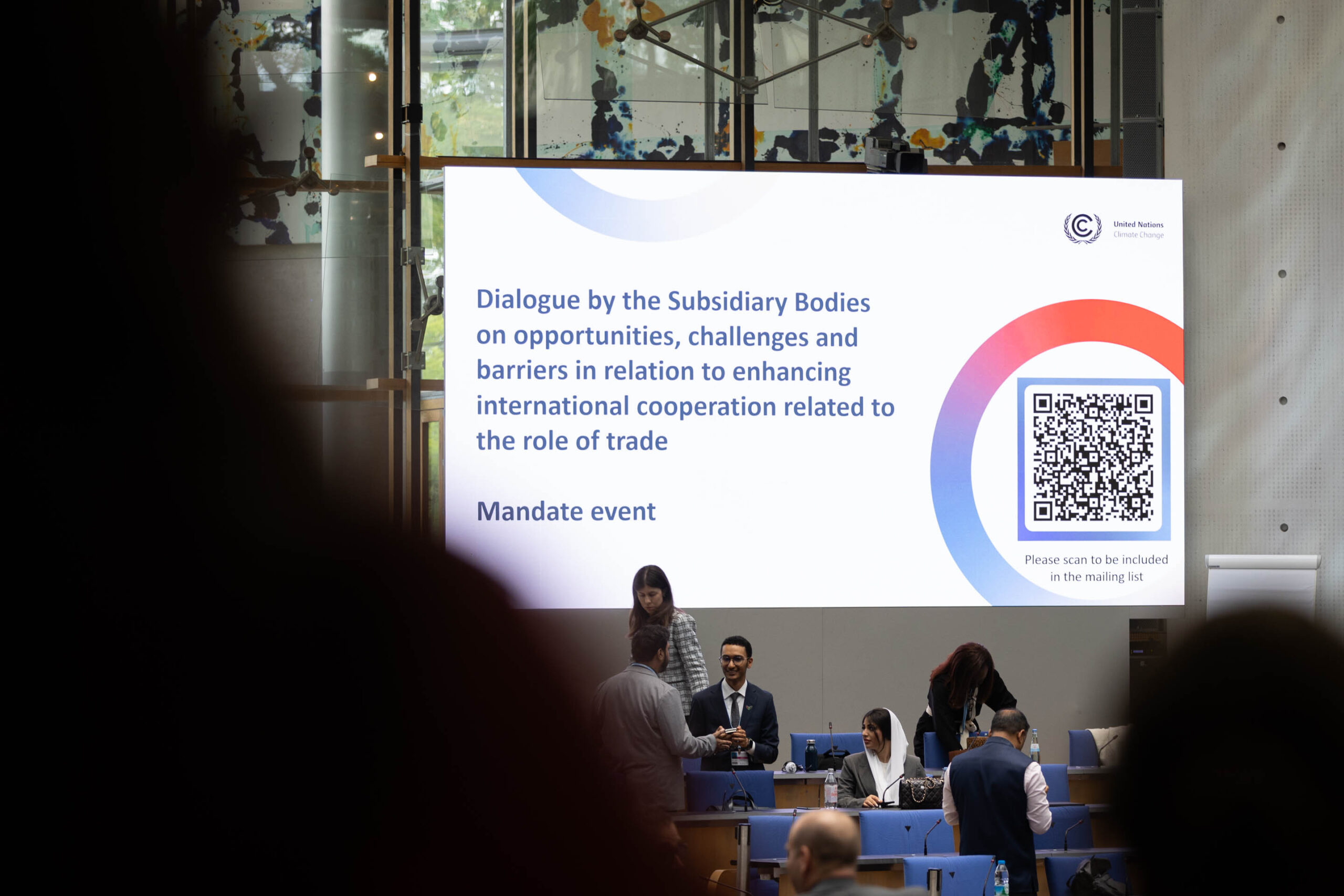
Saturday’s first-ever dialogue on trade under the UN climate regime, meanwhile, also had finance as a transversal topic, especially among statements from developing countries. The African Group called for changes to the global system and expressed concern about market mechanisms, including carbon markets, under which “developing countries export carbon-sink capacity and developed ones import emissions rights”. They also argued that the trade system must leave room for poorer countries to develop.
To that end, the Least Developed Countries Group highlighted the relevance of building in-country capacity for their development, not only bringing it in from outside. A report by UN Trade & Development (UNCTAD), for example, has highlighted that constructing renewable energy projects with international investments that do not pass on technical know-how to developing countries does not guarantee broader economic gains. It could even create a new form of dependency in the name of the green transition, UNCTAD warned.

Nicole Makowski, senior associate with the Climate Finance Group for Latin America and the Caribbean (GFLAC), told Climate Home News the trade dialogue had taken only baby steps. “We still need to clarify the added value of the dialogue; what outcomes it is expected to deliver, and how those outcomes can translate into concrete change,” she said.
The G7’s Voldemort: climate action
As the leaders of the Group of Seven (G7) powerful nations headed to the French spa town of Évian in France for their annual summit from June 15-17, one thing was clear – climate change won’t be on the agenda. In order to enlist the unpredictable US President Donald Trump – who has called global warming a “hoax” and a “con job” – France decided to leave out any overt mention of climate action.
Rebecca Thissen, global advocacy lead at Climate Action Network International, told journalists at the Bonn talks on Monday that this shows some heads of state are “moving away from their climate commitments, or at least they don’t want to be so outspoken about it” as they try to appease the Trump administration. They must be reminded that climate action “is a central element of the global order”, she added, because it’s fundamentally about justice and making society and people’s lives better.
After a meeting of the G7 environment ministers in April, declarations were adopted on issues ranging from water, security, resilience, oceans and biodiversity but the word “climate” was studiously avoided. The statement put out by France also mentioned an initiative to reduce emissions of methane, a powerful greenhouse gas, but did not link it to global warming.
-
European, island states seek clear future for global roadmap to cut fossil fuels
Some European, small island and other nations argue the forthcoming roadmap should be part of UN climate talks, while Russia has resisted this idea -
Fewer journalists register for Bonn talks, as cuts to climate reporting bite
UN data shows a smaller number have signed up to cover the mid-year climate negotiations in Germany than in any year since the COVID-19 pandemic


With climate now resembling Voldemort (He-Who-Must-Not-Be-Named) in international diplomatic circles that include the US, all may not yet be lost. Think-tank E3G said in a pre-G7 briefing that France has nonetheless worked to advance climate-related issues through discussions on energy security in the context of Middle East supply disruptions, de-risking supply chains for critical minerals, and helping debt-laden countries get easier access to affordable capital.
Those leaders who remain committed can use the summit to signal support for climate action on the sidelines, E3G added. Let’s see if any of them dare to play Harry Potter.
Ministry divisions complicate Brazil’s roadmap away from fossil fuels
In a packed room last Friday, the COP30 Presidency presented preliminary elements of the work on the global roadmap for the transition away from fossil fuels and some European and small island governments argued the roadmap should be integrated into the formal negotiation process. But besides the global work, how is Brazil’s national roadmap coming along?
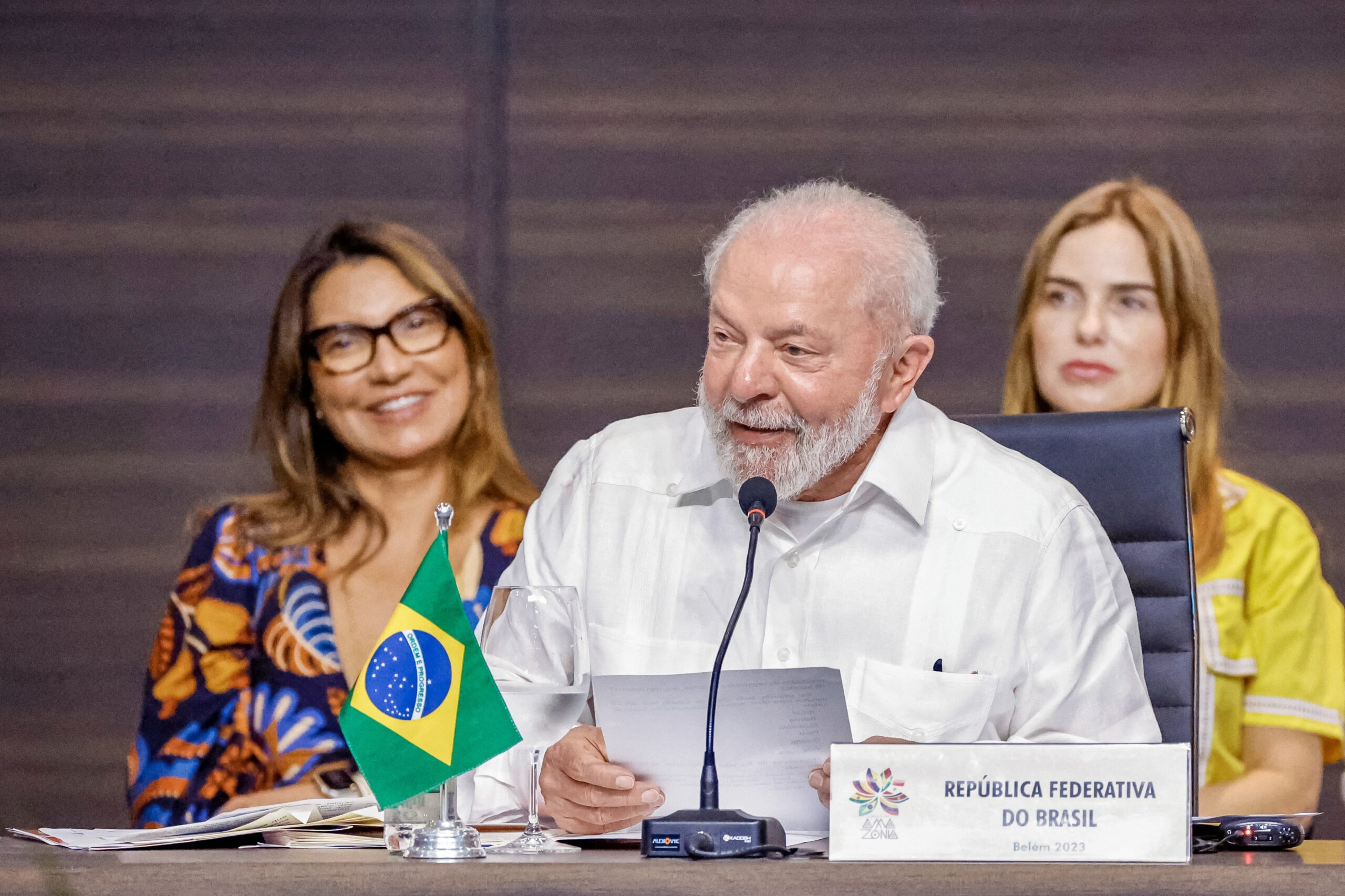
“The presidential order [by President Lula at COP30] was that the ministries of environment, finance and energy should work together,” Flávia Bellaguarda, special advisor to Brazil’s environment ministry, told Climate Home News in Bonn.
“We do have different points of view about what the roadmap means. We have to face our contradictions and bring them to the table because the roadmap is about energy security, economic security, social security,” she said, adding that “we have reached a common place of the guidelines of what must be addressed on the roadmap”.
Those guidelines – which Bellaguarda couldn’t share yet – are now under revision by the Brazilian presidency and then will be analysed by the National Energy Policy Council (CNPE). After those revisions, the three ministries will begin working on the roadmap itself and its governance. That work will include consultations with different stakeholders, including representatives of the energy sector and civil society organisations.
The Brazilian government still prefers not to give dates for these next steps because “they do not expect it to be something quick,” but rather to respect the steps and time that the process requires.
Roadmaps to transition away from fossil fuels are, at least for now, voluntary for each country. “There is no right and wrong on how to do the roadmap. Countries know what is best for each reality,” said Bellaguarda, encouraging countries to advance on their national roadmaps alongside the global one. “It’s not easy to address the issue nationally, but it’s totally necessary.”
The post Bonn Bulletin: Finance dominates discussions in every room appeared first on Climate Home News.