“Family, football and the World Cup should make space for everyone”
Reflections from a trans community organizer in Beirut
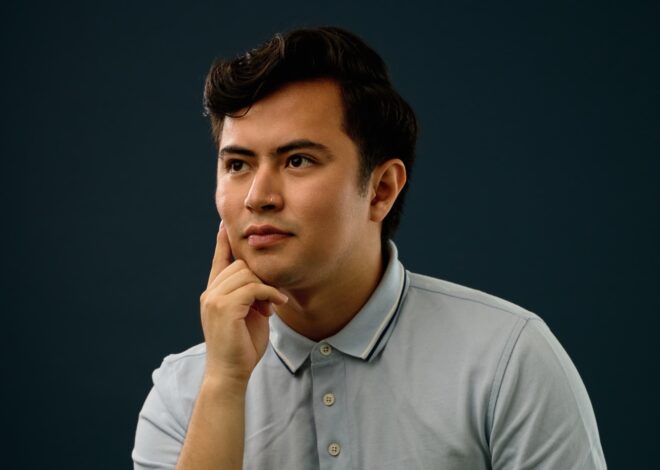
Y. is a Lebanese transman based in Beirut. He is a senior campaigner on gender justice. Y. is also an artist, writer and community organizer.
When I was a little girl, I took a certain mischievous pleasure in getting under my father’s skin during the men’s World Cup. While we watched the matches together, I would deliberately cheer for Germany, the arch-rival of his beloved Brazil, just to provoke him.
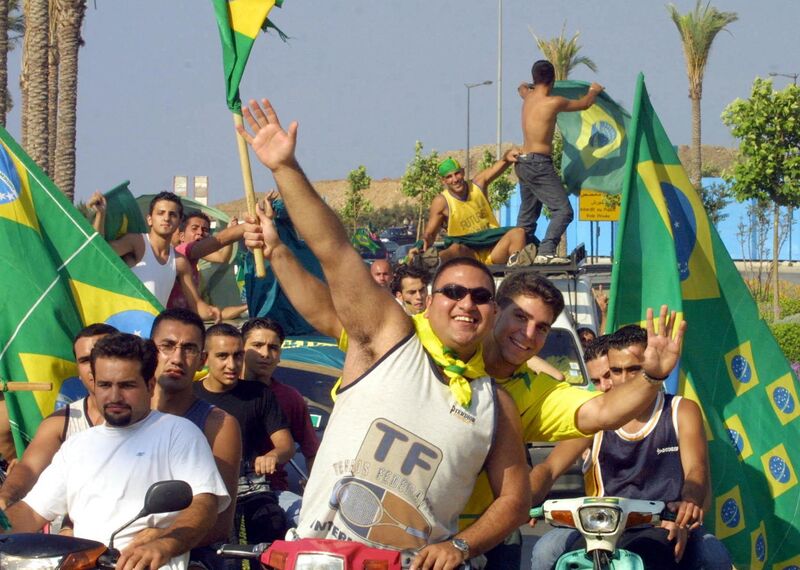
With every World Cup, Beirut, the Lebanese capital, would, and still does, transform into a mosaic of flags draped across balconies, storefronts, and even cars. Spain, France, England, Italy, and of course Germany and Brazil — the two most passionately followed teams. It’s a striking spectacle for a country shaped by so many waves of colonization.
Football was always the thread that bound me to my father, a man of few words. We didn’t talk much, but we shared a quiet understanding: we would watch matches side by side, on television, or sometimes in one of Lebanon’s few stadiums. Football was our language of love.
I was 13 when the whistle blew for the World Cup final between Brazil and Germany on June 30, 2002, at the International Stadium in Yokohama, Japan. I remember our family gathering vividly — uncles, aunts, and cousins of all ages, bursting with the kind of excitement only kids can muster, surrounded by an abundance of food and drinks. In front of that screen, we all became children. There was no difference between young and old, or women and men.
That day, Brazil won its fifth title with two goals. I was left with a quiet bitterness and decided, then and there, to stop cheering for Germany. Why entrust my heart to someone who wouldn’t take care of it?
That same year, I was the only girl at school who not only loved football, but was good at it. Najwa was the only one who could match me. She was a few years older than me, yet we were remarkably similar, both in spirit and in our “tomboyish” appearance.
Finally becoming at home in my body
For years, Najwa and I endured the objections and harsh criticism of teachers, who urged us to stop playing football “like boys”. As girls, we were expected to stay on the sidelines.
But in truth, none of it ever mattered to me. Deep within me lived an unshakeable belief that football belongs to everyone, without exception. I couldn’t understand what all the fuss was about, nor why my father once said, with disappointment and frustration: “You’re a young woman now. Stop playing football like the boys!”
He and my mother tried to steer me toward other passions, like basketball or tennis, sports they deemed “more feminine”. I remember standing there, torn. Should I say to my father, “What’s the difference between a girl and a boy, anyway?!”, or confess to him: “But I am, in truth, a boy, Baba.”
I chose silence.
But at school, I did not stay silent. Together with Najwa, I launched a campaign called “Football for All”, demanding that the administration and the PE teacher form a girls’ team. After a long stretch of mockery and bullying, the school finally relented and assigned Mr Aref to set up the team. But we were given no ball, no time, no real support. Our team became little more than a punchline.
Deep within me lived an unshakeable belief that football belongs to everyone, without exception.
Y, artist, writer and community organizer
Still, I refused to stop playing football. Until one day, I saw Najwa as I had never seen her before, in a pink dress, her hair neatly tied back, long earrings brushing her cheeks. She walked toward me on the field, hesitant, sorrow in her eyes, and said, “My father banned me from playing. I’m sorry.”
That was the last day I ever played football. After that, even my love for the game faded, and with it my excitement for matches and the World Cup.
Everyone around me rejoiced. Only I carried the sadness for years.
For the biggest part of my life, I suffered a deep-seated sense of dread, unexplained ailments, irrational fears and debilitating anxiety. My own gender identity was so well-repressed that I could only “admit” it to myself at 29 years old. Well-surrounded and supported by my queer and feminist friends, I slowly explored my masculinity like a boy going through puberty. First, I tried switching my pronouns to He/Him and loved it. Then with medical supervision, I started my hormonal replacement therapy. In a few months, I was finally home in my body.
Enduring war and loss in Lebanon
I am now a 37-year-old man, living in what is considered a safer part of Beirut.
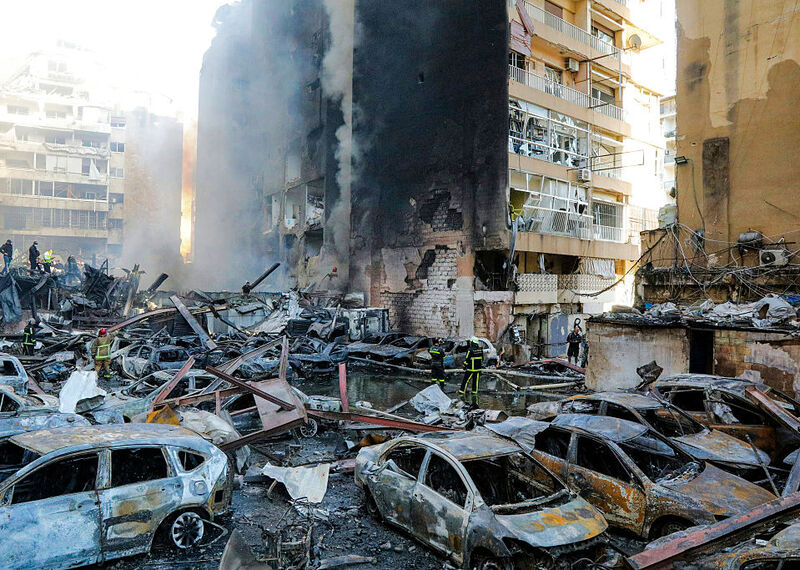
When the first Israeli shells fell on the suburbs of Beirut, where my family lives, it was around three in the morning on March 2, 2026. I immediately called a taxi to pick up my parents, then stood on the balcony, waiting for them to arrive.
When the car pulled up, they stepped out slowly, exhausted. For the tenth time in my life, I watched them carrying bags filled with their belongings and essential documents, fleeing their home. This time, though, they looked older and needed my help to carry everything upstairs. One question kept circling in my mind: if the war drags on and spreads, will we still be able to reach the hospital for my mother’s treatment? Will there still be medicine?
In the first days, still reeling from the shock of war and its terrifying sounds, I had not fully grasped what it meant to have my parents living with me again, seven years after my gender transition. Our relationship had taken many winding paths, shaped by closeness and distance, acceptance and rejection, acknowledgment and denial, tenderness and estrangement. For years, I had been completely cut off from them while transitioning into myself.
The last time we had lived under the same roof, I was 19. Now, I had to readjust to my mother’s fixation on tidiness, her insistence on aligning the rugs just so, and my father’s habit of monopolizing the couch and the television. The same news and images on loop, as if repetition might soften the grief.
One afternoon, I noticed a stack of papers beside him. The same map, printed three times, one enlarged. Our village and home flattened and reduced to a satellite image. This is the third time my father will lose his land in a single lifetime. Forced out, occupied, erased. Three copies. Three occupations. Repetition never softens the grief.
Family and football should make space for everyone
My parents make me laugh. They have a wonderful sense of humour, even when they don’t mean to.
Warmth fills my home. And then, I catch myself noticing. They get pronouns right, and when they slip, they apologize and correct themselves immediately. We share morning coffee and evening tea, gather around the table for meals that are both delicious and nourishing. They treat my friends with kindness and respect my privacy. And my cats adore them.
I am fully myself, without fear, without hiding, without restraint, and I am met with complete acceptance and love.
Y, artist, writer and community organizer
I feel like a child again, held in a love that is real and, this time, unconditional. I am fully myself, without fear, without hiding, without restraint, and I am met with complete acceptance and love.
The road here was incredibly hard, but that only makes the arrival more beautiful. There is war outside, yes. But after decades, there is finally peace in our home.
Is it a coincidence that my reunion with my family comes just weeks before the 2026 FIFA World Cup, set to take place in the United States, Canada, and Mexico?
Or is it a message from the universe?
My father and I will once again watch football together. It doesn’t matter in the slightest which side he chooses to support or which I do. What matters is that we will be sitting side by side, in the same room, in front of the television, cheering.
Both family and football should make space for everyone. The world and the World Cup belong to all of us. Humanity must win over discrimination, fear and prejudice.
*Name has been changed for protection reasons
Make this a World Cup for everyone
The post “Family, football and the World Cup should make space for everyone” appeared first on Amnesty International.