
COP30 Bulletin Day 5: COP30 could greenlight work on a fossil fuel transition roadmap
As a growing number of countries start to rally publicly behind a roadmap to transition away from fossil fuels at COP30, governments are trying to pin down what those discussions would look like, and what the talks in Belém could deliver.
At the leaders’ summit before COP began, Brazilian President Luiz Inácio Lula da Silva issued a call to push forward on a fossil fuel transition roadmap. His COP30 team has so far stuck to the line that the ask for a roadmap was already in the country’s NDC issued last year, and as such is not new, although it is not on the formal agenda in Belém.
“This is something that is critical to the COP30 presidency,” COP30’s programme director Alice Amorim told a high-level event on the sidelines of the talks this Friday. “Not all of the outcomes will all be visible this year. But it’s important to have a process. It’s important to start moving from the idea of action to actual action.”
“We hope to see many results coming out of this COP and these conversations – and we stand ready as COP30 presidency to facilitate as much as we can the conversations moving forward.”
Speaking to journalists separately on Friday afternoon, Germany’s State Secretary for Climate Action Jochen Flasbarth said he had not expected “anything here on fossil fuels, but President Lula’s opening speech was a game changer […] Now I think there is potential to do something and start a process.”
-
COP30 draft text includes energy transition minerals in UN climate first
A draft negotiating text on defining principles for a just transition to clean energy systems recognises the social and environmental risks associated with mining critical minerals -
Despite record turnout, only 14% of Indigenous Brazilians get access to COP30 decision-making spaces
Around 2,500 Indigenous people from across Brazil have gathered in Belém, with leaders demanding a bigger role in the negotiations -
COP30 Bulletin Day 4: African and Arab groups want adaptation indicator delay
The groups are concerned that the current indicators will pressure them to spend more of their own governments’ scarce funds on adaptation


The form and scope of any roadmap is still on the drawing board. UK climate minister Katie White, for example, said at the same event that “we need universal action combining all the (existing) initiatives into one global system that powers and coordinates change. This is what the roadmap can do.”
While discussions on a plan to transition away from fossil fuels are new inside negotiating rooms, outside of the UN climate process countries have been talking about it for years through initiatives like the Beyond Oil and Gas Alliance (BOGA) and the Powering Past Coal Alliance (PPCA).
For Vera Rodenhoff, Germany’s deputy director for international climate action, coming out of COP30 with a clear path forward is key. The process should be informed by the best available science and deliver action “inside and outside the climate process”, she said.
A process to craft a roadmap would take as a basis the COP28 deal in 2023 where all countries first agreed to transition away from fossil fuels in energy systems, Fiji’s permanent secretary for climate change, Sivendra Michael, told Climate Home News. Small island nations, among them Fiji, have pushed for the conversations to advance in the negotiating rooms.
“It’s about time that we start negotiating on the pathways to reach that compromise,” he said, adding that for a roadmap to be successful, finance for developing countries will be critical. “[Developing countries] deserve to have access to predictable and simplified finance so that we are able to respond accordingly,” Michael said.
However, the abrupt start to these conversations – spurred by Lula’s pre-COP call for a fossil fuel transition roadmap – has resulted in some groups of countries scrambling to formulate a unified position, especially because it is not on the formal negotiating agenda.
Richard Muyungi, the chair of the African Group of Negotiators (AGN), told Climate Home News on Friday that African countries had yet to coordinate their views on the issue, but would do so if developments at COP30 require it.
He emphasised that while it “is a very important issue”, Africa is a diverse continent including oil-producing nations and others that have low levels of development, so settling on a pan-African view will require understanding a range of views.
“But… generally as a continent, we are the least responsible for the [climate] problem, and this is the continent which chooses to harness all the available energy sources to develop,” he said, adding that Africa should not be forced or pushed towards a trajectory that threatens to undermine its development agenda.
Indigenous peoples blockade venue to defend territories
Carrying traditional spears and signs calling for an end to the exploitation of the Amazon rainforest, dozens of Indigenous people blocked the main entrance to the COP30 climate summit on Friday morning.
Long queues formed as delegates were asked to enter through what is normally the venue’s exit to access the negotiations. The protest ended after several hours when COP30 bosses André Corrêa do Lago and Ana Toni joined the demonstrators to listen to their concerns.
At a press conference on Friday evening, Corrêa do Lago said the protesters had arrived peacefully and that security had done their job correctly. The demonstrators had met with himself, Brazilian Environment Minister Marina Silva and Indigenous Peoples Minister Sonia Guajajara – herself a Brazilian indigenous activist and environmentalist – where they expressed concerns about their limited participation in COP30.
“I explained that COP30 is, in fact, a positive agenda for Indigenous peoples, and that we want to increase constantly the recognition of their work as guardians of these extraordinary forests all over the world,” Corrêa do Lago said.

On Friday morning outside the venue, the protesters, belonging to the Munduruku tribe, demanded an end to development projects, including large-scale infrastructure and mining that affect the rights of Indigenous people living in the Valley of the Tapajós River in the Amazon, InfoAmazonia reported.
They carried signs displaying slogans like “fighting for our territories is fighting for our lives” alongside images showing the destruction of natural habitats.
While delegates waited in a long queue in Belém’s hot, humid weather, many remarked that it was refreshing to see a COP presidency engage directly with demonstrators. Over the past three summits – in Egypt, the United Arab Emirates and Azerbaijan – similar protests outside UN venues had been effectively banned.
“This is what happens when you finally host the talks in a democracy,” one said.
-
Despite record turnout, only 14% of Indigenous Brazilians get access to COP30 decision-making spaces
Around 2,500 Indigenous people from across Brazil have gathered in Belém, with leaders demanding a bigger role in the negotiations -
COP30 Bulletin Day 4: African and Arab groups want adaptation indicator delay
The groups are concerned that the current indicators will pressure them to spend more of their own governments’ scarce funds on adaptation -
At COP30, roadmap away from fossil fuels gains ground – but next step unclear
Ministers from Brazil, Germany and UK – with support from five more countries – expressed support for a roadmap away from fossil fuels at COP30

During the sit-in, Brazilian army officers in riot gear formed a protective cordon in front of the venue’s main entrance. The COP30 hosts have stepped up security measures after a group of Indigenous protesters on Tuesday evening forced their way into the conference centre and clashed with security guards.
Brazil, the host nation of COP30, has stressed the importance of giving Indigenous people a voice in this year’s climate negotiations.
But Indigenous people are frustrated that more cannot access the negotiating area of the COP30 venue, known as the Blue Zone. According to analysis by InfoAmazonia, only 360 of 2,500 Indigenous Brazilians received accreditation for that space. The Brazilian government says that’s more than any previous COP – but it’s only a small fraction of the 56,000 people registered to attend this year’s UN climate talks.
Climate Home joined a flotilla of dozens of boats on Wednesday when hundreds of Indigenous people, many hailing from the Tapajós River region, sailed in the Amazon River delta to raise concerns about Brazil’s oil and gas, mining and agricultural expansion in their forests.
Following Friday’s protest, Brazilian media outlet InfoAmazonia reported that the federal government announced it will move forward with the demarcation of the Sawré Muybu and Sawré Ba’pim Indigenous Lands (TIs) of the Munduruku people in Pará state, and has committed to analysing the impacts of large infrastructure projects in the Tapajós Basin.
Transition minerals make debut in COP text
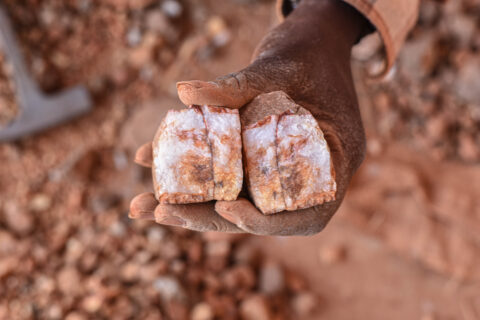
As pushed by developing countries and campaigners, the question of how to extract the minerals needed to ramp up clean energy deployment in a greener and fairer way have appeared in draft text at the climate negotiations for the first time.
On Friday, an informal note gathering the views of countries was issued as the basis of negotiations for the Just Transition Work Programme, which aims to ensure that the transition to clean energy systems is equitable and sustainable among and within countries.
The text – none of which is currently agreed – recognises “the social and environmental risks associated with scaling up supply chains for clean energy technologies, including risks arising from the extraction and processing of critical minerals”.
COP30 could confront “glaring gap” in clean energy agenda: mining
It also “recalls” the principles and recommendations of a UN expert panel, which said governments and industry should put human rights at the core of the minerals value chain, from mining to recycling.
Campaigners widely welcomed the inclusion of critical minerals – after language was proposed by the UK, backed by Australia and the European Union – as a key step, even though it will still have to be agreed by all countries.“For the first time, minerals are on the main stage of COP negotiations – no longer a side show,” said Melissa Marengo, a senior policy officer at the Natural Resource Governance Institute (NRGI).
Fossil fuel presence reaches largest share at COP30
Meanwhile, as delegates in Belém discuss how to approach an energy transition, a new report says they are more likely to bump into a fossil fuel lobbyist in the conference hallways than in previous years.
A yearly analysis by a coalition of NGOs called Kick Big Polluters Out revealed on Friday that one in 25 people at COP30 represent the fossil fuel industry in some way, with a total of 1,600 lobbyists granted access to the UN climate change conference in Brazil.
If grouped together into a delegation, fossil fuel industry representatives would outnumber every other government delegation but that of the host nation Brazil. They also outnumber all the delegates from the 10 most climate-vulnerable nations combined.
The lobbyists mostly register through trade bodies such as the International Emissions Trading Association, which brought 60 people including representatives of TotalEnergies, BP and ExxonMobil, the report says.
Many of the industry representatives carry badges approved by countries known as “party overflow”, the report says – among them Patrick Pouyanné, CEO of TotalEnergies, who was awarded a French badge.
Gender talks hung up on definitions
Last year’s COP agreed on a 10-year extension of the Lima Work Programme to integrate gender equality into climate action and the development of a new Gender Action Plan, with two workshops scheduled before COP30 – one at the mid-year talks in Bonn and another in September in Addis Ababa. With all that previous effort, negotiators expected a smooth start in Belém – but that wasn’t the case.
On Monday, the first day of the summit, Paraguay and Argentina raised their hands to argue that gender should be defined as “biological sex”, something activists said would backslide on human rights language the UN has been using.
Yet while the negotiations may have got hung up on definitions, also on Monday, 92 countries signed a Global Statement on Gender Equality and Climate Action. In it they committed to adopt a strong and inclusive gender plan “guided by an understanding of multidimensional factors, including clear priorities, and ensure meaningful and effective implementation over the next decade.”
“Multidimensional factors” is a way to refer to intersectionality – a term that denotes how social relations involve multiple forms of discrimination and also caused rows during COP29.
Catherine Pettengell, executive director of Climate Action Network UK, welcomed the statement’s reference to key issues faced by women and girls due to climate climate impacts – such as gender-based violence and disproportionate care work – as well as calls for them to be addressed. “This demonstrates an important commitment to address the structural barriers to equality that women and girls face,” she said.

Claudia Rubio Giraldo, from the Women’s Environment & Development Organization, said the statement champions a constructive spirit and the collaboration needed to reach a good agreement, something she described as especially important in the current political climate.
But she also said that without financing, the push for gender balance and women’s inclusion in climate action would fail. “You can’t develop a gender action plan that is not actionable because it doesn’t have the resources to be actionable,” she said.
Campaigners are not expecting a quantitative goal to be set, but rather to gain direct access to funding for women — and want gender to be addressed in the climate finance negotiations.
The current draft that is undergoing revision by governments has close to 30 activities, each one with around five deliverables, including inputs from civil society. Rubio told Climate Home News, “we don’t care if it’s long, as we have 10 years to work on this.”
The post COP30 Bulletin Day 5: COP30 could greenlight work on a fossil fuel transition roadmap appeared first on Climate Home News.