

After El Fasher: Ending Sudan’s Atrocious War
emactaggart
After El Fasher: Ending Sudan’s Atrocious War
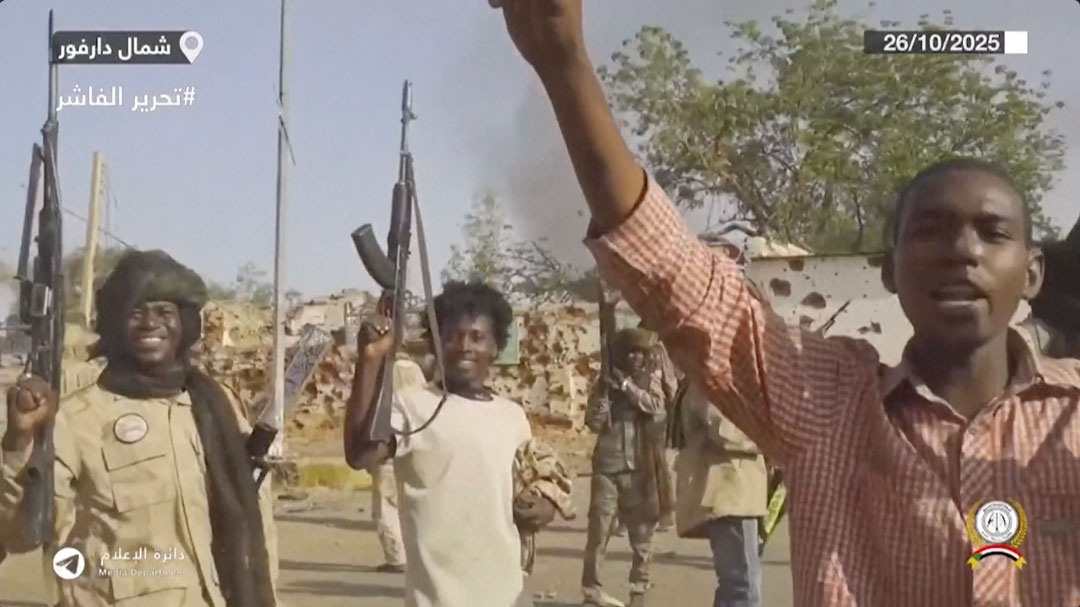
Sudan’s ugly civil war, already marked by famine and atrocities, has reached a new low. On 26 October, the paramilitary Rapid Support Forces (RSF) overran El Fasher, the last remaining stronghold of its rival, the Sudanese army, in the country’s western Darfur region. What followed was apparent mass slaughter by the RSF, often caught on video. The paramilitary group trapped civilians inside the city and then proceeded to mow people down – killing some at gunpoint and detaining, torturing and raping many others. Some estimate that the death toll is in the thousands. The International Criminal Court, which has been seized of the situation in Darfur since 2005, has already given notice that it is taking steps to preserve and collect evidence for use in future prosecutions.
The El Fasher bloodletting follows two-plus years of international dereliction in a war that has been alternately fed and left to fester by outside actors. Washington in particular has failed to give the conflict the attention it needs, its gaze having been drawn to crises in Ukraine and Gaza. But perhaps that is changing. For several months, the U.S. has been putting more diplomatic energy into peacemaking, and the El Fasher massacres may boost its interest yet more. Reports suggest that President Donald Trump himself was appalled at the footage of the violence. On 12 November, U.S. Secretary of State Marco Rubio spoke in unusually blunt terms about the war and the RSF’s role in it. He also said external support for the paramilitary “needs to stop” – though he did not mention its chief foreign backer, the United Arab Emirates, by name.
Whether the atrocities will prove a genuinely galvanising moment depends to a great extent on what Washington does now. If it follows through on its heightened rhetoric, and throws its full weight behind ending the fighting, then it could make a real difference. The focal point of its efforts should be the truce proposal that the so-called Quad, comprising Egypt, Saudi Arabia, the UAE and the U.S., has put on the table. Progress has proven elusive to date. The RSF has accepted the proposal (while continuing to fight), and the Sudanese army’s embattled leader, General Abdel Fattah al-Burhan, is still reviewing it. To get to a truce and make it stick, the Trump administration will simultaneously have to persuade Burhan to take the deal, over the objections of his shaky domestic coalition, and insist that the UAE throttle back its patronage for the RSF.
A Civil War with Regional Characteristics
Sudan’s nightmarish war erupted in April 2023 amid a power struggle within the junta that had seized power in 2019 amid a popular uprising against the 30-year dictatorship of Omar al-Bashir. At that time, the Sudanese army and the RSF, headed by General Mohammed Hamdan Dagalo “Hemedti”, jointly overthrew Bashir. Protesters took to the streets to call for a civilian-led administration. While the generals acceded to that demand, by 2021 they had reneged by staging a coup, arresting the prime minister and dissolving the civilian government. As outside pressure on the factious junta grew, the tenuous partnership between the army and the RSF frayed. Fighting broke out in the capital city of Khartoum and quickly spread to engulf most of the country.
Sudan’s civil war also pits regional powers against one another. Egypt and a number of other countries, including Saudi Arabia, Türkiye, Iran, Algeria and Qatar, back the Sudanese army and – like the UN – deem it to be Sudan’s recognised government. Whatever qualms they may have about Burhan and his reliance on Islamist factions tied to the notorious Bashir regime, these are trumped by the sense that the army is a state institution and, therefore, the only legitimate claimant to sovereign authority in the current contest.
The RSF, on the other hand, has one major patron, namely the UAE. The RSF arose out of Darfuri Arab militias, which Khartoum armed to fight its dirty wars with long-running insurgencies in Darfur and Kordofan, predominantly driven by non-Arab groups. The RSF in time became a security and commercial conglomerate that sent tens of thousands of troops to fight the Houthis in Yemen on behalf of the Emiratis and the Saudis, served as a praetorian guard for Bashir in Khartoum and controlled lucrative gold mines, especially in Darfur. In the RSF, the UAE sees a trusted partner in a strategic region it fears will at some point again succumb to Islamist political forces.
Shocking Atrocities
Though Sudan has a long history of atrocious violence, including by both sides thus far during the current war, the RSF’s conduct in El Fasher is jarring by even those standards. For some eighteen months, the group besieged the city, blocking most food and other supplies from entering, causing a devastating humanitarian crisis. Then, in the months leading up to the final takeover, the paramilitary built an earthen wall around the city to prevent civilians from escaping without going through an RSF checkpoint.
While a picture is still emerging about what happened inside that wall, press reports and available video evidence indicate several bouts of mass killing, including at a maternity hospital in which RSF fighters appear to have shot hundreds of men, women and children in cold blood. RSF fighters also appear to have conducted systematic summary killings of men both inside the city and outside, where they captured some trying to flee
The reported atrocities have caused an outcry inside and outside Sudan, denouncing not only the RSF, but also the UAE, which stands accused of arming the insurgents.
Images of the horrors, many caught on video brazenly taken by RSF fighters themselves, have gone viral. They appear to reflect deliberate targeting of non-Arabs based on ethnicity, especially Zaghawa, a community that mobilised many fighters to wage war on the RSF on the army’s side. Women and girls have been subjected to widespread sexual violence; there are harrowing accounts of gang rape in front of relatives. For survivors, there is scant to no medical care, and many are on the brink of starvation. Those who can pay to leave are apparently spared. Meanwhile, RSF troops are holding other residents hostage for ransom. The reported atrocities have caused an outcry inside and outside Sudan, denouncing not only the RSF, but also the UAE, which stands accused of arming the insurgents.
As the reputational costs are tallied, the balance on the battlefield is clearer: El Fasher’s seizure is a boon for the RSF and a major setback for the army. The RSF now controls most of western Sudan, with the army holding the central area around Khartoum and everything east of the Nile River. The front is now centred in Kordofan, which sits south west of Khartoum and east of Darfur. With the El Fasher battle resolved, fighting in Kordofan looks set to escalate.
But the RSF could also direct its newfound bandwidth elsewhere, including putting new towns and cities under siege in Kordofan, as it now appears to be doing. It might also, for example, strike Omdurman, the sister city of Khartoum that sits west of the capital across the Nile and is surrounded by vast tracts of desert, or the northern riverine areas that are home to many army officers and Sudanese elites and have thus far seen little fighting.
There is additionally a concern – shared by many analysts – that the war could settle into a prolonged stalemate that will morph into durable partition. Neighbouring countries fear that such a failed-state scenario would spell even more long-term instability that spills beyond Sudan’s borders.
A Possible Truce
The RSF’s bloody victory in El Fasher dealt a blow to diplomatic efforts to end the war, which had appeared to be gaining traction for the first time in over a year. Just days before El Fasher’s capture, Washington gathered representatives from both warring parties as well as Egypt, Saudi Arabia and the UAE to discuss a truce. Officials from the U.S. and its three Arab Quad partners shuttled between the Sudanese belligerents probing for common ground on a proposal but failed to achieve a breakthrough. Those meetings followed months of difficult U.S.-led negotiations within the Quad that culminated in a 12 September joint roadmap for ending the war, starting with a humanitarian truce, followed by a permanent ceasefire and a new transitional civilian-led government.
While an important step forward, the roadmap has yet to get under way, and U.S.-led shuttle diplomacy toward that goal has continued despite the events in Darfur. Success continues to be elusive. The RSF on 6 November publicly accepted the U.S. truce proposal, even as it continues to push forward with its offensives, but Burhan has yet to commit. His hesitancy no doubt reflects political forces that are pulling him in opposite directions. He is under pressure from the U.S., Egypt and Saudi Arabia to agree to the truce proposal, but powerful generals and allies want him to reject it. He chaired a stormy meeting of his government’s security and defence council in Khartoum, trying to build a consensus negotiating position, where he heard fierce opposition to peace talks. Some in his coalition demand that the RSF withdraw from all major cities and disarm – in effect, surrender – before a ceasefire can be discussed. The RSF is certain to reject those conditions.
As the RSF gains ground … it could exacerbate tensions within the army, even threatening a power struggle or a split among factions.
Still, U.S. negotiations continue with Burhan and his representatives, while senior Egyptian officials appear heavily involved, too. Some believe that Burhan may have already agreed to a truce privately but is now trying to conjure a supportive internal coalition to make this position possible, including by continuing to negotiate over the terms. His caution is doubtless a partial function of a precarious domestic position. His army appears in poor shape to stop the RSF from making further advances. As the RSF gains ground, seemingly with robust support from the UAE, it could exacerbate tensions within the army, even threatening a power struggle or a split among factions. If Burhan’s political and military coalition fractures, and he loses support among allied militias (on which he depends heavily for the bulk of ground fighting), the strategic implications for the army could be serious indeed.
The most important elements of that coalition are Darfuri anti-RSF armed groups, which have just suffered a devastating defeat in El Fasher, and former Bashir regime officials and other Islamists who help mobilise popular defence militias against the RSF. Both pillars have been shaken. The Darfuri groups are particularly incensed that the Sudanese army appears to have made a deal with the RSF for a last-minute withdrawal of its top officers from El Fasher, leaving its allies to fend for themselves. Meanwhile, tensions between Burhan and the Bashir-era Islamists have risen as the U.S.-led Quad process has advanced, given that the Islamists believe the Quad aims to exclude them from a transitional government.
Burhan’s best option may be to accept the truce on offer to halt the RSF advances; use the Quad format to negotiate bilaterally with the UAE; and table the rest of his coalition’s demands for the subsequent negotiations over the balance of the roadmap and a course beyond it. Given the internal obstacles, the U.S. and other Arab countries would need to provide guarantees to Burhan that RSF offensives will stop and that Emirati-sponsored arms flows to the RSF will ebb or cease entirely. They should also offer commitments to support Burhan as leader of the army should he accept the truce, making clear to other powerful generals that they would not tolerate a putsch attempt from those who wish to continue prosecuting the war.
By way of inducement, the U.S. could offer to lift sanctions on Burhan personally, as well as other sanctions against Sudan. The U.S. should also involve Türkiye and Qatar in its diplomacy, given the ties both have to Burhan and the former Bashir regime. Back-channel negotiations with former Bashir officials in his coalition may be especially critical to give Burhan the space to agree to a truce followed by negotiations. As the RSF gains ground, seemingly with robust support from the UAE, it could exacerbate tensions within the army, even threatening a power struggle or a split among factions
For its part, the UAE could give private assurances that the RSF will honour a deal and promise to de-escalate the war and arms flows in coordination with a truce. The U.S. may need to guarantee to Burhan and the other Quad members that the UAE will abide by these commitments. Such guarantees could then allow the other powers to press Burhan to accept a truce that might leave him dangerously exposed to internal dissent.
A Critical Moment
The horrors in El Fasher highlight the need to draw a line under this disastrous war, as well as the importance of ensuring that this latest peace initiative not be allowed to founder.
Given the stakes and the apparent U.S. window to sway Burhan toward peace, now is the time for international leaders to proactively work to end this war. President Trump should personally call the other Quad leaders to push the roadmap over the finish line. Trump and Saudi Crown Prince Mohammed bin Salman could lead the push for such a call when the latter visits the White House in the third week of November. (Saudi Arabia considers the war across the Red Sea in Sudan a direct threat to its national security, but thus far it has been unable to convince Burhan to accept the truce or to convince the UAE to alter course.)
The U.S., Saudi Arabia and others should … urge that Türkiye and Qatar (which are outside the Quad but also have influence with the army) echo its message to Burhan.
Trump and Bin Salman could also reach out to Burhan directly, promising to lift sanctions, halt RSF advances, broker de-escalation with the UAE and support his leadership of the army, should he move ahead with negotiations. The U.S., Saudi Arabia and others should also urge that Türkiye and Qatar (which are outside the Quad but also have influence with the army) echo its message to Burhan. The U.S. and Saudi Arabia could also try to broker talks between Burhan and the UAE’s President Mohammed bin Zayed Al Nahyan – recognising that efforts by Egypt and others to repair ties between the UAE and the Sudanese army have flagged.
While Trump and Bin Salman may hesitate to put themselves on the line with this sort of top-level engagement, it is the kind of diplomatic leadership that has been missing to date and could well be required to end this messy war, which involves so many Middle East actors. Trump should act on his reported revulsion at the videos emerging from El Fasher. An initiative on Sudan could build upon the momentum his administration created with the Arab world in halting the war in Gaza. It would also win the Trump administration good-will in much of Africa, where the Sudan war is now gaining more attention. Military escalation and state collapse in Sudan, by contrast, would have dire implications not just for Sudan’s African neighbours but also for the Arab Gulf states and broader Middle East to which Trump has devoted considerable attention.
As for the UAE, the spotlight on its role in the conflict is growing harsher and likely to keep doing so as long as the war continues. While Abu Dhabi believes it is pursuing its own legitimate interests, its go-it-alone approach on Sudan has created an untenable situation, with an arms race inside Sudan that is breaking the country apart and creating a humanitarian hellhole for millions of Sudanese. To bolster the U.S.-led efforts to end the war, the other Quad partners – the UAE, Saudi Arabia and Egypt – should have more good-faith conversations on ways to narrow their differences, especially over how to create conditions for the two sides to accept a truce. They will invariably need to agree on limiting arms exports to the belligerents in a coordinated manner in conjunction with a truce and ceasefire negotiations.
To End a Ruinous War
Far too much blood has been spilt in this ruinous war. But while El Fasher is an indelible stain on the world’s conscience, it may also be the prod that powerful capitals need to help bring the horrific fighting to a close. Now is the time for the U.S. and key Arab countries to double down on the diplomatic efforts they have made in the year to date and work to make their roadmap a reality, including the promises of a civilian-led transitional government should the war finally halt. Sudan is already a grim example of the challenges of peacemaking in a world between orders, but it need not be an example of total failure. If key world leaders take this chance to push for peace, the war could end. Otherwise, the tragedy of El Fasher could too easily repeat itself.
