
The EU should partner with Global South to protect carbon-storing wetlands
Fred Pearce is a freelance author and journalist writing on behalf of Wetlands International Europe.
Everybody knows that saving the Amazon rainforest is critical to our planet’s future. But the Pantanal? Most people have never heard of Brazil’s other ecological treasure, the world’s largest tropical wetland – let alone understood its importance, as home to the highest concentration of wildlife in the Americas, while keeping a billion tonnes of carbon out of the atmosphere, and protecting millions of people downstream from flooding.
Hundreds of millions of euros are spent every year on protecting and restoring the world’s forests. Wetlands are just as important, yet don’t get anything like the same recognition or investment. That, scientists insist, has to change. And Europe can lead the way.
For forests, the EU already provides financial and technical assistance for a series of Forest Partnerships with non-EU countries, as part of its Global Gateway strategy for investing globally in environmentally and socially sustainable infrastructure. Such partnerships operate in Guyana, the Democratic Republic of the Congo, Mongolia and elsewhere.
I believe the time is now right to establish a parallel EU Wetland Partnerships, framing wetlands as a strategic, cost-effective investment offering high financial, environmental and social returns.
Wetlands store a third of global soil carbon
Wetlands come in many shapes and sizes: freshwater peatlands, lakes and river floodplains, as well as coastal salt marshes, mangroves and seagrass beds. They are vital natural infrastructure, maintaining river flows that buffer against extreme weather events such as floods and drought, as well as protecting biodiversity, and providing jobs and economic opportunities, often for the most vulnerable nature-dependent communities.
Wetlands cover just six percent of the land surface, but store a third of global soil carbon – twice the amount in all the world’s forests. Yet they have been disappearing three times faster than forests, with 35 percent lost in the past half century.
Their loss adds to climate change, causes species extinction, triggers mass exoduses of fishers and other people whose livelihoods disappear, and depletes both surface and underground water reserves. Continued wetlands destruction is estimated to contribute five percent of global CO2 emissions – more than aviation and shipping combined.
EU Wetland Partnerships can be critical to unlocking finance to stem the losses and realise the benefits by promoting nature-based economic development, such as sustainable aquaculture, eco-tourism, and forms of wetlands agriculture known as paludiculture, while contributing to climate adaptation by improving the resilience of water resources.
Pantanal faces multiple threats
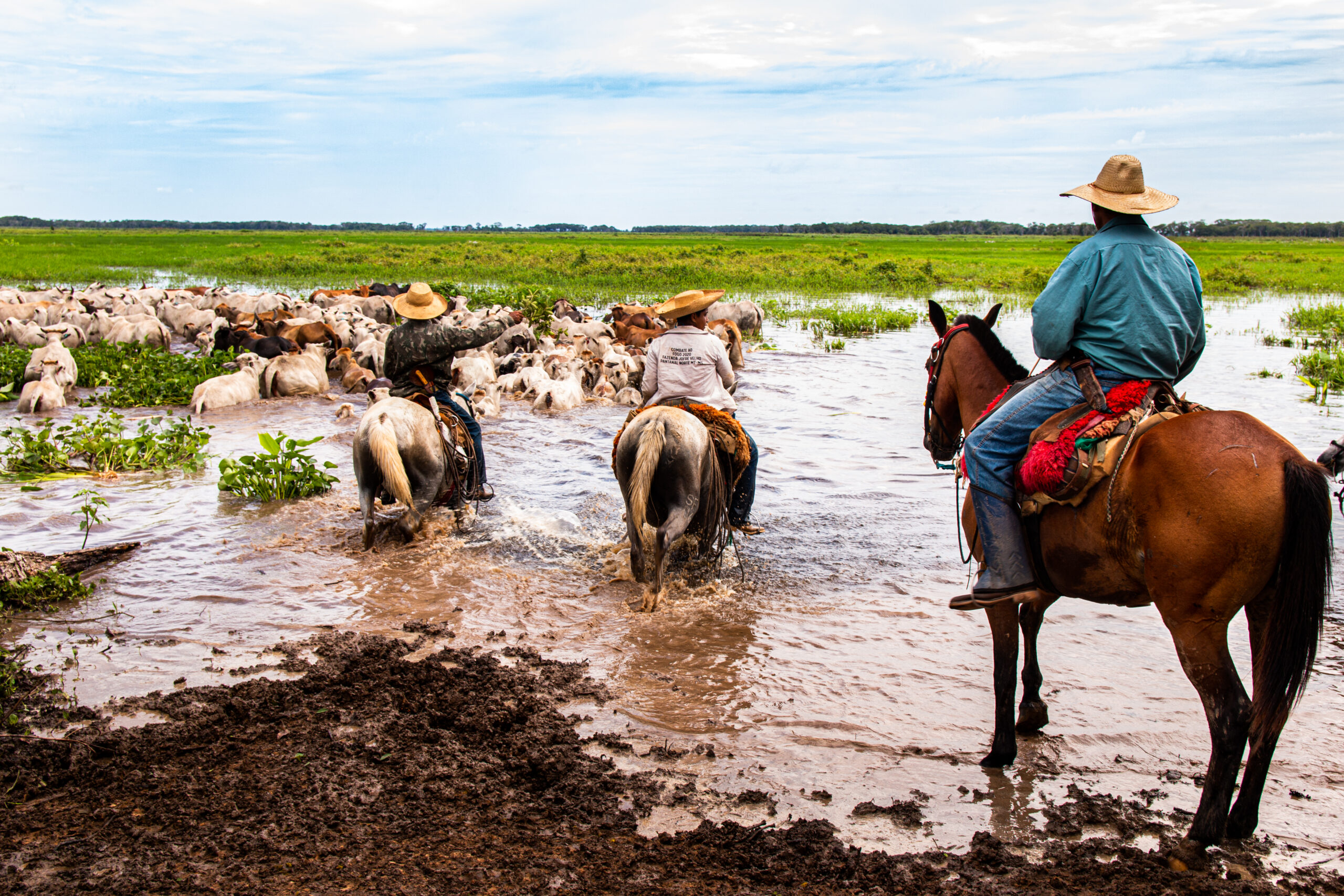
The Pantanal would be a prime candidate for a flagship project. The vast seasonal floodplain stretching from Brazil into Paraguay and Bolivia, is home to abundant populations of cayman, capybaras, jaguars and more than 600 species of birds. It is vital also for preventing flooding on the River Paraguay for some 2000 kilometres downstream to the Atlantic Ocean.
The Pantanal faces multiple threats, from droughts due to upstream water diversions and climate change, invasions by farmers setting fires and a megaproject to dredge the river and create a shipping corridor through the wetland.
But EU investment to achieve partnership targets agreed with Brazil on restoration, conservation and sustainable management could reinvigorate traditional sustainable land use – including cattle ranching that helps sustain the Pantanal’s open flooded grasslands.

Accounting for wetlands carbon in national emissions targets
Africa, a main focus of the Global Gateway, has abundant potential for early partnership initiatives. They include the Inner Niger Delta in Mali, which sustains some three million inhabitants, but is threatened by upstream dams and conflicts over resources between farmers and herders.
Another is the Sango Bay-Minziro wetland, a region of swamp forests, flooded grasslands and papyrus swamp straddling the border between Uganda and Tanzania on the shores of Lake Victoria, Africa’s largest lake.
The two countries have agreed to cooperate in pushing back against illegal logging, papyrus extraction and farming, and Wetlands International has been working with local governments to encourage community-based initiatives. But an EU partnership could dramatically expand this work, helping sustain the wider ecology of Lake Victoria and the Nile Basin.
Deep in the Amazon, forest protection cash must vie with glitter of illegal gold
National pledges to bring wetlands to the fore of environmental action are proliferating rapidly, especially since the 2023 global climate stocktake at COP28 in the UAE emphasised the importance of accounting for wetlands carbon in national emissions targets.
Since then, more than 50 countries have signed up to the 2023 Freshwater Challenge to protect freshwater ecosystems; more than 40 governments with 40 percent of the world’s mangroves have endorsed the 2022 Mangrove Breakthrough that aims to protect and restore 15 million hectares by 2030; and the newly established Peatland Breakthrough aims at rewetting at least 30 million hectares and halting the loss of undrained peatland by 2030.
Such ambition will almost certainly be endorsed at the 2026 UN Water Conference to be hosted by the UAE and Senegal in December this year. But the key to turning targets into reality on the ground lies in finding the billions of Euros needed to deliver on the ambition. EU Wetlands Partnerships could help seal the deal.
The post The EU should partner with Global South to protect carbon-storing wetlands appeared first on Climate Home News.